

Coronary Heart Disease and Type 2 Diabetes Metabolomic Signatures in the Middle East


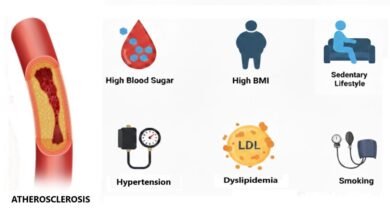
This recently published research explores the metabolomic profiles of Type 2 Diabetes, both with and without Coronary Heart Disease (CHD), specifically within the largely underrepresented Middle Eastern population, using data from Qatari adults. The study leverages the power of metabolomics to identify potential biomarkers for Type 2 Diabetes and its common complication, CHD.
The cross-sectional study analyzed 641 metabolites from a large cohort of 3,679 Qatari adults, drawing data from the Qatar BioBank (QBB) and the Qatar Cardiovascular Biorepository (QCBio). Researchers utilized univariate and pathway enrichment analyses to pinpoint metabolites linked to Type 2 Diabetes, stratified by CHD comorbidity. They also developed Machine Learning (ML) models and metabolite risk scores to evaluate their predictive capability for these conditions.
The results demonstrated that numerous metabolites were significantly associated with Type 2 Diabetes in both cohorts. Key metabolites strongly linked to Type 2 Diabetes included 1,5-anhydroglucitol (1,5-AG), glucose, and mannose, with highly significant p-values across both QBB and QCBio. Other metabolites, like gamma-glutamylglutamine, showed significant association in only one cohort. Pathway enrichment analysis revealed that pathways common to both cohorts, such as galactose metabolism and valine, leucine, and isoleucine biosynthesis and degradation, were significantly enriched.
In conclusion, the study suggests that metabolomic profiling holds significant promise for the early detection of metabolic changes that precede the clinical presentation of Type 2 Diabetes and Type 2 Diabetes associated CHD. The developed risk scores performed well in predicting the conditions. However, the authors emphasize the need for longitudinal data to fully establish these findings as definitive evidence for disease risk. Ultimately, early detection through metabolomics can facilitate timely interventions and enhance management strategies for both Type 2 Diabetes and CHD patients.
Source:
Elshrif, Isufaj, El-Menyar, Kunji, Ullah, Elsousy, Mokhtar, Ahmad, Al-Nesf Al-Mansouri, Beotra, Al-Maadheed, Mohamed-Ali, Saad and Al Suwaidi. Front. Endocrinol. https://www.frontiersin.org/journals/endocrinology/articles/10.3389/fendo.2025.1531525/abstract