

Public Health
[:en]Public health research from Middle East and North African countries – MENA region[:]
-

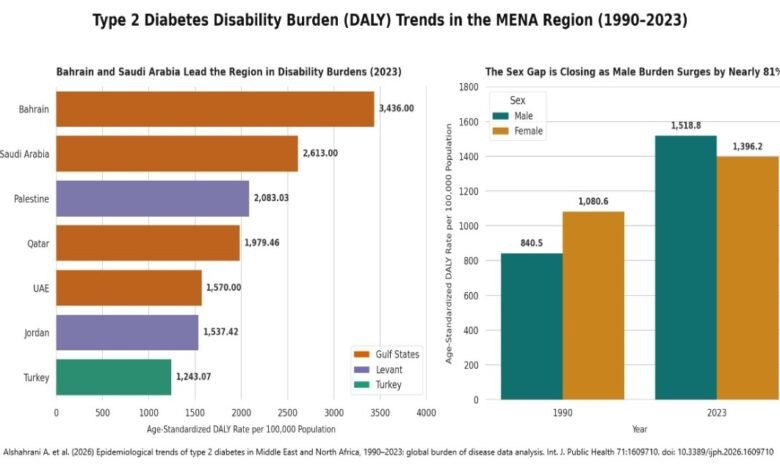
Type 2 Diabetes in MENA Region – more than 1 in 10 adults are living with Type 2 Diabetes
There has been a tremendous surge in prevalence of Type 2 Diabetes in MENA region. The age-standardized prevalence of T2DM in the MENA region has climbed from 5.57% in 1990 to 11.51% in 2023, indicating that more than 1 in 10 adults in the region are currently living with diagnosed or undiagnosed Type 2 Diabetes. These are some of the…
Read More » -
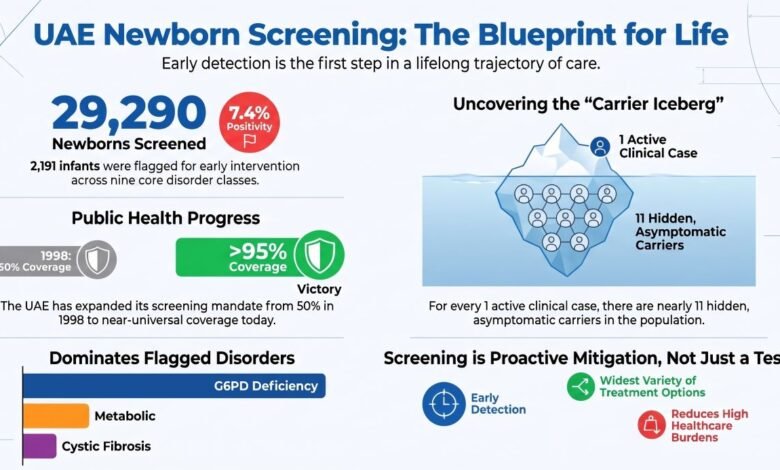
UAE Newborn Screening Study Reveals High Prevalence of G6PD Deficiency and Metabolic Disorders
A UAE Newborn Screening Study analyzed data from 29,290 newborns screened between 2021 and 2023, and found that 7.4% of the cohort tested positive for one or more disorders, underscoring the critical nature of early intervention in the region. This retrospective cross-sectional study published in Frontiers in Pediatrics has provided the first comprehensive analysis of nine classes of disorders detected…
Read More » -
CRISPR-Cas9 in Human Gene Therapy: Clinical Progress, Ethical Dilemmas, and Regulatory Responses
CRISPR-Cas9 is an RNA-based system originally discovered as an immune mechanism in bacteria and archaea, now adapted by scientists to make precise, inexpensive alterations to the human genome. The technology utilizes a Cas9 endonuclease guided by a single guide RNA (sgRNA) to create double-strand breaks at specific DNA sequences. These breaks are repaired via non-homologous end joining (NHEJ) or, if…
Read More » -
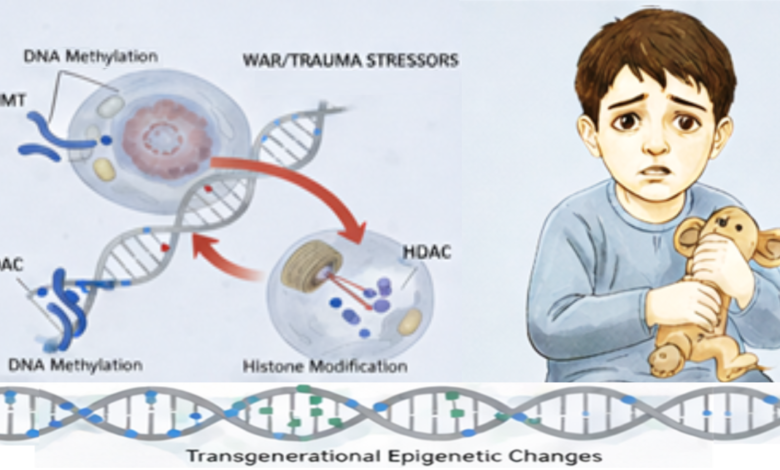
Epigenetic Signatures of Intergenerational Exposure to Violence – Study on three generations of Syrian refugees
The devastating consequences of war are typically measured in terms of displacement and physical harm. However, a groundbreaking study on three generations of Syrian refugees has discovered epigenetic signatures of intergenerational exposure to violence showing that the scars of violence may be written into the very DNA of those affected. Published in Scientific Reports, the study investigates how exposure to…
Read More » -
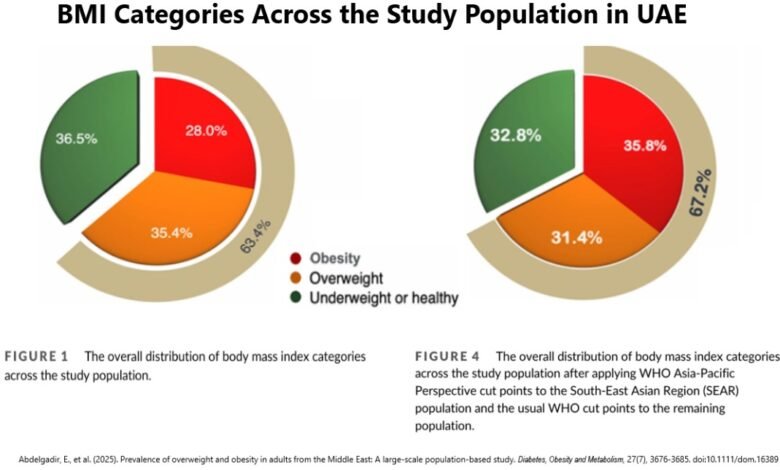
Prevalence of Overweight and Obesity in Adults in Middle East
A landmark study involving over 440,000 adults conducted in UAE has revealed that 63.4% of the total population in UAE was either overweight or obese. This cross-sectional, multi-centre design, population-based study analyzed data of all adults aged >18 years who attended the Dubai Academic Health Corporation (DAHC) between January 2018 and August 2023. Overweight and Obesity (OAO) was defined according…
Read More » -
Male Infertility in Egypt – Epidemiology and temporal trends
Male infertility is a significant global health issue. However, lack of reliable epidemiological data on male infertility in Egypt and the Middle East and North Africa (MENA) region poses a challenge to understanding region-specific risk factors. A recent retrospective study on male infertility in Egypt sought to bridge this gap. The study reviewed the medical records of 3,037 infertile men…
Read More » -
UAE Indoor Air Pollution – Research Strategy
In the United Arab Emirates (UAE), Indoor Air Pollution has become an exceptionally important health issue. Weather conditions like extreme summer temperatures frequently exceeding 42°C (108°F) force residents to spend prolonged periods indoors in tightly sealed, air-conditioned buildings. This high indoor exposure, combined with significant outdoor fine particulate matter (PM2.5) from windblown desert dust and anthropogenic sources, has raised serious…
Read More » -
Expanded Premarital Screening in UAE – Outcomes of Capacity Building Workshops for Physicians
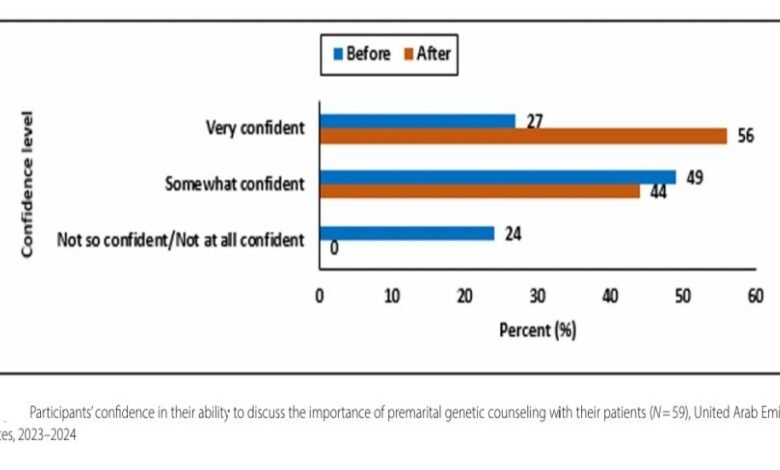
Premarital screening in UAE is a critical public health strategy for mitigating hereditary disorders in the local United Arab Emirates (UAE) population, where consanguineous marriages account for approximately half of all unions. However, the effective implementation of expanded PMS programs relies heavily on the expertise of healthcare professionals, many of whom lack specific training in genetic counselling. To address this…
Read More » -
Influence of High BMI on Male Infertility – Oxidative Stress Markers and Semen Parameters
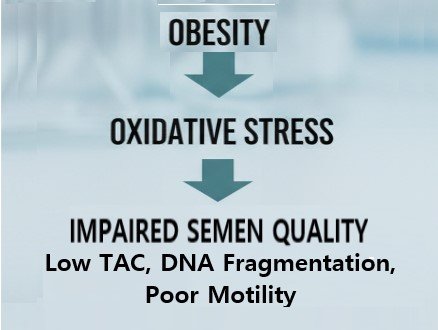
This is a study on the influence of High BMI on Male Infertility. Infertility affects a significant number of couples globally, with male factors, primarily poor semen quality, contributing to nearly 40% of cases. While the precise causes of infertility are often unclear, this study from Iran investigated the influence of body mass index (BMI) on semen quality and oxidative…
Read More » -
Value-based healthcare in the GCC: achieving sustainable access to specialty pharmaceuticals
The Gulf Cooperation Council (GCC) nations are at a critical juncture in healthcare, facing a dual challenge: a rising burden of complex, high-cost medical conditions—including cancer, neurological disorders, and rare diseases—and the escalating expense of specialty pharmaceuticals. Traditional volume-based healthcare models are proving inadequate to ensure sustainable and equitable patient access to these life-changing therapies. To navigate this, the GCC…
Read More »