

Cancers
-

Tumor Associated Macrophages as Therapeutic Targets in NSCLC (Non-Small Cell Lung Cancer)
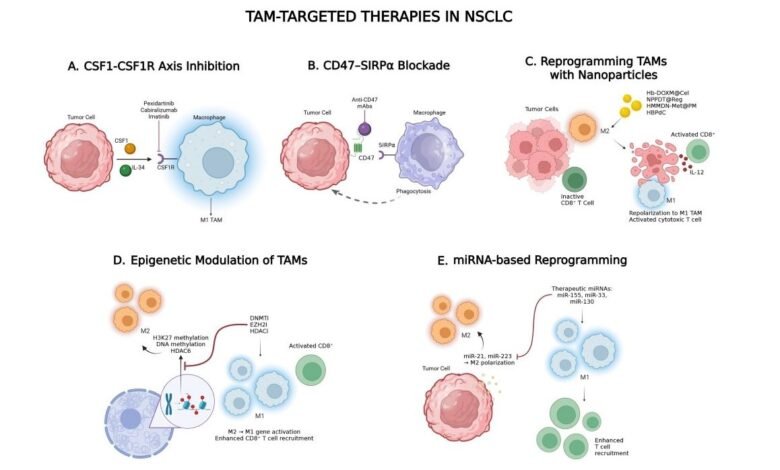
The role of Tumor Associated Macrophages as Therapeutic Targets in NSCLC (Non-Small Cell Lung Cancer’s) immune environment is the topic of recent review article published in Frontiers in Immunology by researchers from Abu Dhabi University. The article focuses on the involvement of tumor-associate macrophages in resistance to immune checkpoint inhibitors (ICIs). Although immune checkpoint inhibitors (ICIs) have improved outcomes for…
Read More » -
Dynamic Role of Extracellular Matrix in Cancer Immune Evasion
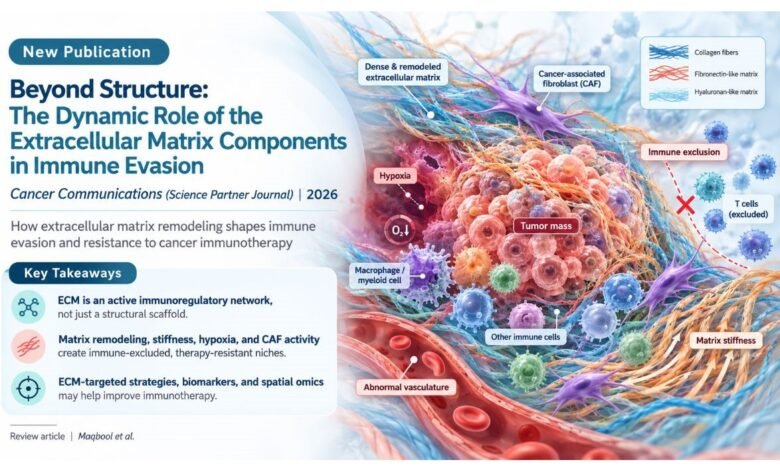
A review study on the role of extracellular matrix in cancer immune evasion published in Cancer Communications, provides a timely and comprehensive perspective on how the extracellular matrix (ECM) actively shapes immune evasion in cancer. Titled “Beyond Structure: The Dynamic Role of the Extracellular Matrix Components in Immune Evasion,” the article moves beyond the traditional view of the ECM as…
Read More » -
Fecal Microbiota and Colorectal Cancer in Saudi Arabia – Study Reveals Distinct Fecal Microbial Consortium
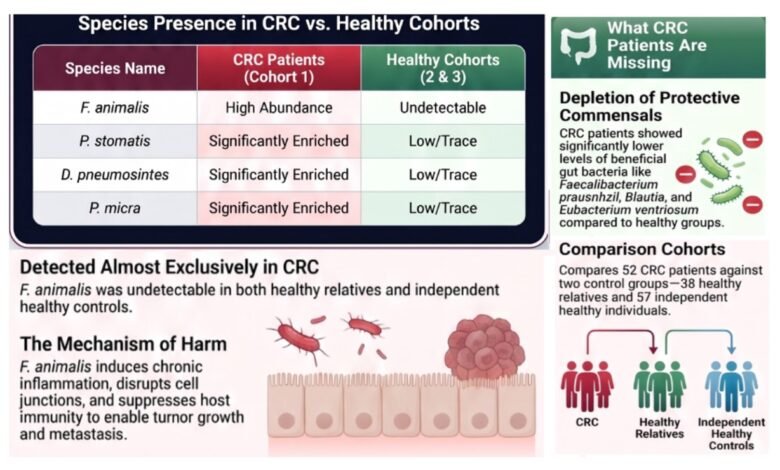
A distinct association of fecal microbiota and Colorectal Cancer in Saudi Arabia has been identified in a groundbreaking study published in Scientific Reports. The study profiled the human fecal microbiota to identify a unique microbial consortium in Saudi Arabia using Oxford Nanopore Technology to advance non-invasive screening methodologies. The research team conducted a case-control study enrolling 127 Saudi nationals: 52…
Read More » -
Colorectal Cancer in Oman – Exploring associations between epidemiological risk factors
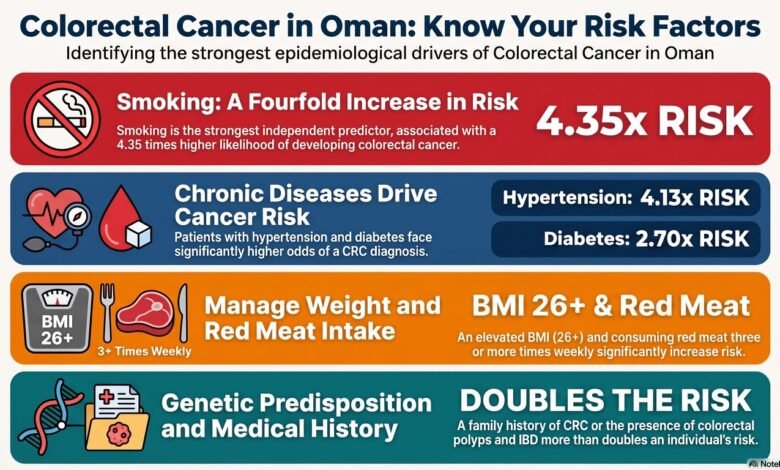
Colorectal Cancer in Oman is the most prevalent cancer among males and the third most common cancer among females. This multicentre case control study, conducted at Sultan Qaboos University Hospital and the Royal Hospital in Muscat, provides a detailed examination of the factors driving Colorectal Cancer (CRC) in Oman. Researchers highlight a concerning epidemiological shift in Oman and the wider…
Read More » -
Colorectal Cancer Screening in Saudi Arabia – Adherence and Barriers
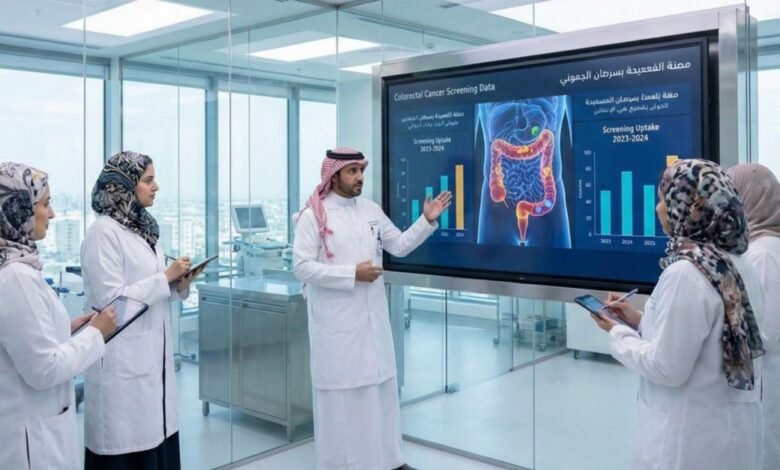
A recent has revealed a “concerningly low” rate of colorectal cancer screening in Saudi Arabia, despite the disease being the most common cancer among Saudi men and the third most common cancer among women. The study, which surveyed 573 adults aged 40 and older across all Saudi regions, found that only 12.7% had ever undergone a colonoscopy, and only 19.5%…
Read More » -
Cancer in Elderly Population of MENA Region – The Growing Crisis
Cancer in Elderly Population of MENA Region is a growing crisis. Cancer rates among the “oldest-old” (Individuals aged 85 and above) in the Middle East and North Africa (MENA) region are accelerating at double the global pace. These are the findings of researchers at American University of Beirut Medical Center who analysed data from the Global Burden of Disease (GBD)…
Read More » -
Breast Cancer in the MENA Region – Somatic Mutation Profiling and Therapeutic Landscape
Breast cancer in the MENA region often presents at a younger age and in more advanced stages. While this suggests a unique biological and genetic profile in this region, the available genomic databases lack adequate data from MENA populations to understand the disease drivers and therapeutic opportunities specific to this demographic. To address this gap, researchers at Hamad Bin Khalifa…
Read More » -
Cancer Drug Testing could be transformed by this new paper based platform: Spheromatrix
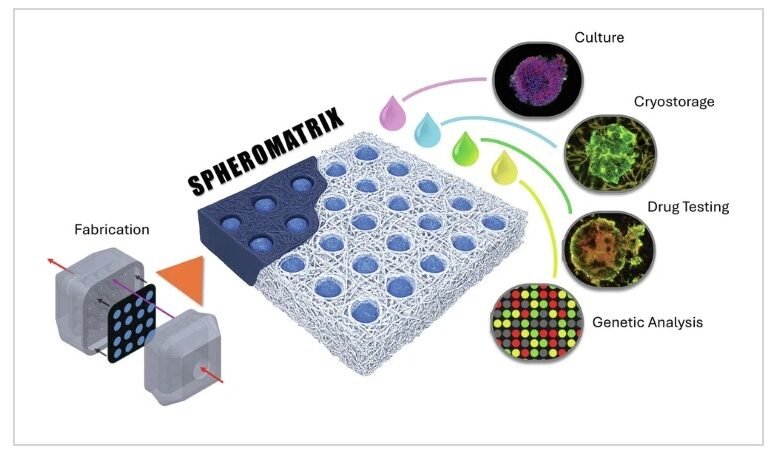
Researchers at New York University Abu Dhabi (NYUAD) have developed Spheromatrix, a simple and low-cost technology that enables tumor models to be grown, frozen, and stored for future use in cancer drug testing. The study on development and validation of this technology was recently published in Nature Microsystems & Nanoengineering. Three-dimensional (3D) in vitro tumor models are increasingly recognized as essential…
Read More » -
The Obesity and Cancer Link – Unraveling molecular interconnections and identifying potential therapeutic targets of significance
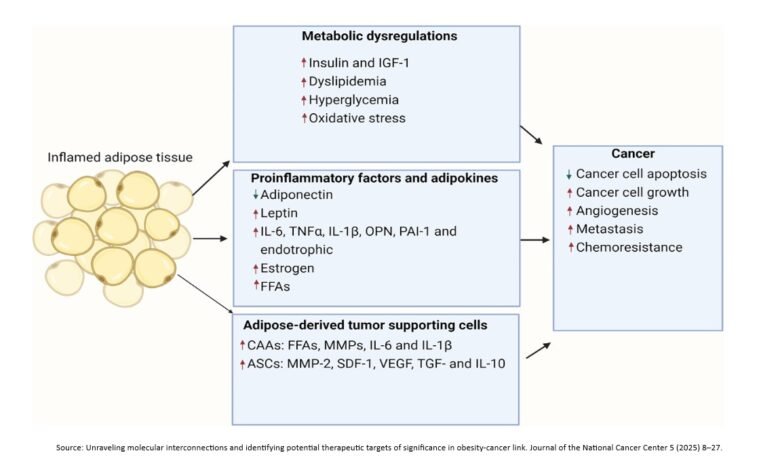
The link between Obesity and Cancer has emerged as a significant risk factor for a range of malignancies, including melanoma, endometrial, prostate, pancreatic, esophageal adenocarcinoma, colorectal carcinoma, renal adenocarcinoma, and pre-and post- menopausal breast cancer. A narrative review published by researchers from Qatar, Saudi Arabia, UAE, and India offers a comprehensive examination of the molecular interconnections between obesity and cancer…
Read More » -
Colorectal Cancer in GCC Gulf Countries – Diagnosis and Management: Expert Recommendations
Colorectal Cancer in GCC (Gulf Cooperation Council) countries has incidence rates from 9.9 to 15.9 per 100,000 people. Experts are concerned about a rising trend, especially in individuals less than 50 years old, linked to rapid urbanization, poor diet, low physical activity, and increased hereditary risk due to a high rate of consanguineous marriages. Survival rates in the Gulf are…
Read More »