

Influence of High BMI on Male Infertility – Oxidative Stress Markers and Semen Parameters

This is a study on the influence of High BMI on Male Infertility. Infertility affects a significant number of couples globally, with male factors, primarily poor semen quality, contributing to nearly 40% of cases. While the precise causes of infertility are often unclear, this study from Iran investigated the influence of body mass index (BMI) on semen quality and oxidative stress markers.
The cross-sectional study categorized 280 infertile men into three BMI groups: normal, overweight, and obese. Comprehensive semen analysis was conducted, assessing reactive oxygen species (ROS) levels, sperm plasma membrane lipid peroxidation (LPO), total antioxidant capacity (TAC), and the DNA fragmentation index (DFI).
The study confirmed a significant detrimental effect of elevated BMI, particularly obesity, on male fertility. Key findings are as follows:
The obese infertile group showed a significant reduction in both sperm count and total sperm count compared to controls and overweight men. Significant impairments were also observed in sperm motility and normal morphology. Furthermore, non-motile sperm and the teratozoospermia index (indicating abnormal morphology) were significantly elevated in the obese participants
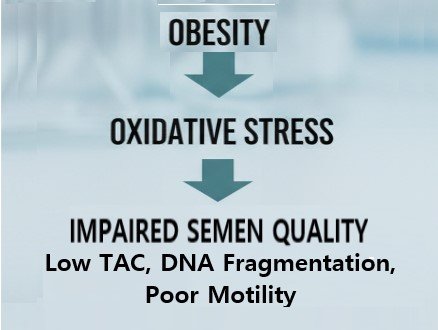
Another striking finding was the substantial reduction in Total Antioxidant Capacity (TAC) observed specifically in the obese infertile group. This highlights obesity’s adverse effect on antioxidant defense mechanisms. While Reactive Oxygen Species (ROS), lipid peroxidation (LPO), and DNA Fragmentation Index (DFI) did not show significant differences across all groups, strong correlations were noted between elevated BMI, reduced TAC, and an increase in ROS.
The observed decline in TAC and its correlation with BMI, alongside the significant reduction in key sperm parameters, demonstrates the complex relationship between obesity-related oxidative stress and compromised sperm function. Increased LPO also significantly correlated with abnormalities in normal morphology and defects in the sperm neck and mid-piece.
These findings confirm obesity as a key modifiable risk factor for male infertility and emphasize the necessity of targeted clinical interventions to manage obesity and improve reproductive outcomes in affected men.
Reference Source:
Mosanezhad, Z. et al. The influence of body mass index on oxidative stress markers in infertile men’s semen parameters. Clin Exp Reprod Med. Doi: https://doi.org/10.5653/cerm.2025.07955