

Fecal Microbiota and Colorectal Cancer in Saudi Arabia – Study Reveals Distinct Fecal Microbial Consortium

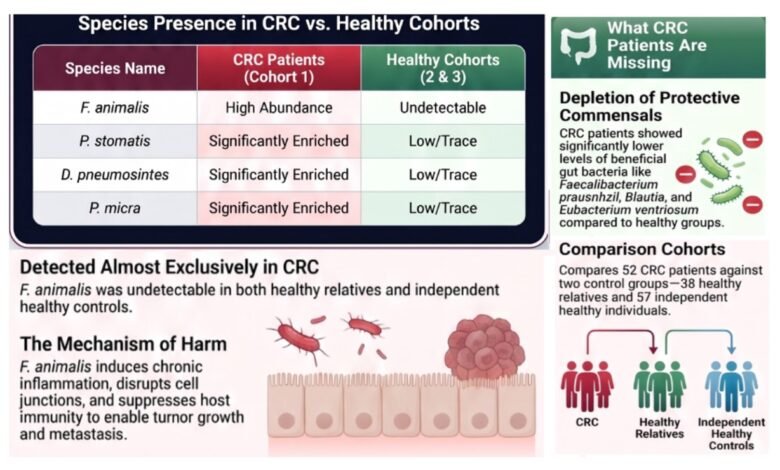
A distinct association of fecal microbiota and Colorectal Cancer in Saudi Arabia has been identified in a groundbreaking study published in Scientific Reports. The study profiled the human fecal microbiota to identify a unique microbial consortium in Saudi Arabia using Oxford Nanopore Technology to advance non-invasive screening methodologies.
The research team conducted a case-control study enrolling 127 Saudi nationals: 52 patients with clinically diagnosed colorectal cancer, 38 healthy relatives, and 37 independent healthy controls. Among the 127 participants, 59.8% were female, and the median age differed significantly across cohorts, with the colorectal cancer patients being the oldest cohort (median age 62 years).
To profile their gut environments with species-level taxonomic resolution, the investigators leveraged Oxford Nanopore Technology to perform full-length 16S rRNA gene sequencing. This long-read platform provides near-complete coverage of the 16S rRNA gene, surpassing traditional short-read tools.
The sequencing results revealed a distinct fecal microbiota signature. A major discovery was that the oral anaerobe Fusobacterium animalis was detected almost exclusively in patients with colorectal cancer, while remaining undetectable in both healthy cohorts. Notably, 78.8% of these cancer patients presented with left-sided primary tumors. Furthermore, co-occurrence network analysis demonstrated that F. animalis, Peptostreptococcus stomatis, Dialister pneumosintes, and Parvimonas micra form a tightly connected pathogenic microbial consortium unique to patients with colorectal cancer. Mechanistically, F. animalis is known to induce chronic mucosal inflammation, bind to epithelial cells, and activate oncogenic pathways like Wnt/β-catenin. Similarly, P. stomatis promotes tumorigenesis by activating downstream ERBB2-MAPK signaling.
Conversely, the fecal microbiota of cancer patients showed a significant depletion of protective, short-chain fatty acid-producing gut commensals like Faecalibacterium prausnitzii and Blautia luti. Interestingly, the study also revealed that patients with colorectal cancer consumed significantly fewer dietary polyols (sugar alcohols), highlighting a correlation between diet and gut dysbiosis.
While the national incidence of colorectal cancer in Saudi Arabia surged 11.4-fold between 1990 and 2019, clinical data characterizing the native fecal microbiota associated with this malignancy has remained scarce. Since traditional screening methods like colonoscopies are highly invasive and suffer from poor patient compliance, finding highly sensitive biomarkers is essential for non-invasive screening.
By successfully utilizing Oxford Nanopore Technology to map the native fecal microbiota of Saudi cohorts, the researchers have established a robust scientific baseline. Identifying this distinct microbial consortium provides a promising, culturally tailored biomarker panel that could elevate the accuracy of future non-invasive screening protocols across Saudi Arabia and the wider Gulf region.
Ultimately, this work overcomes key epidemiological representation gaps and moves clinical diagnostics closer to effective precision medicine on a global scale.
Source: Aldriwesh M.G., Altammami M., Alswaji A.A. et al. High resolution full-length 16S rRNA gene sequencing reveals distinct fecal microbial consortium associated with colorectal cancer in Saudi Arabia. SciRep (2026). https://doi.org/10.1038/s41598-026-62044-x
For more regional research on cancers, visit https://menamedicalresearch.com/news/category/cancers/