

CRISPR-Cas9 in Human Gene Therapy: Clinical Progress, Ethical Dilemmas, and Regulatory Responses

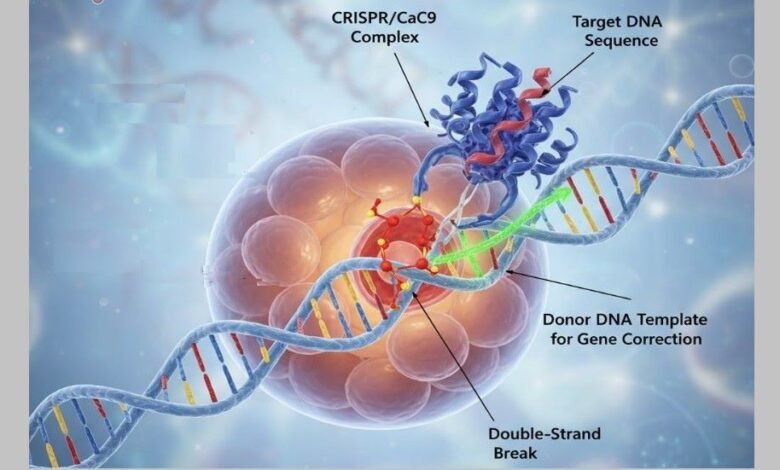
CRISPR-Cas9 is an RNA-based system originally discovered as an immune mechanism in bacteria and archaea, now adapted by scientists to make precise, inexpensive alterations to the human genome.
The technology utilizes a Cas9 endonuclease guided by a single guide RNA (sgRNA) to create double-strand breaks at specific DNA sequences. These breaks are repaired via non-homologous end joining (NHEJ) or, if a donor template is present, homology-directed repair (HDR), which allows for precise gene correction.
Clinical progress has been significant, particularly for monogenic disorders:
- Sickle Cell and Beta-Thalassemia: FDA-approved trials in 2023 demonstrated that targeting the BCL11A gene could restore healthy fetal hemoglobin production, providing lifetime cures for the majority of participants.
- Neuromuscular Disorders: Studies show promise in treating Duchenne muscular dystrophy by rectifying mutations in the dystrophin gene.
Ethical Dilemmas and “Designer Babies”
The most contentious application involves germline editing, that is, altering embryos so that changes are passed to future generations. A major ethical crisis occurred in 2018 when twin girls were born in China with CRISPR-edited embryos intended to provide HIV resistance, sparking global condemnation over the lack of transparency and unknown long-term effects.
Key ethical concerns include:
- Consent and Autonomy: Future generations cannot consent to permanent genetic alterations that may have unforeseen evolutionary consequences.
- The Slippery Slope: There is fear that therapeutic use will devolve into “designer babies,” where parents select for non-medical traits like IQ or physical attractiveness.
- Justice: Such technology could exacerbate socioeconomic inequality, creating a “genetic divide” between those who can afford enhancements and those who cannot.
Regulatory Landscape
Regulations vary globally: countries like Germany and Canada have strict prohibitions on embryonic research, while the UK and US allow limited, non-reproductive research under rigorous oversight.
The authors conclude that while CRISPR offers “enormous promise,” it requires a unified global governance framework to ensure scientific progress does not compromise human dignity or equity.
Reference Shafique, K., Nadeem, H., Hussain, Z., & Raza, A. (2026). CRISPR-Cas9 in human Gene Therapy: Clinical Progress, Ethical Dilemmas, and Regulatory Responses. MENA Journal of Bioscience Research, 1(2). https://doi.org/10.64913/mmrmjbr.v1i1.18
Article summarized by Zoya Hussain