

-
Cancers

The Obesity and Cancer Link – Unraveling molecular interconnections and identifying potential therapeutic targets of significance
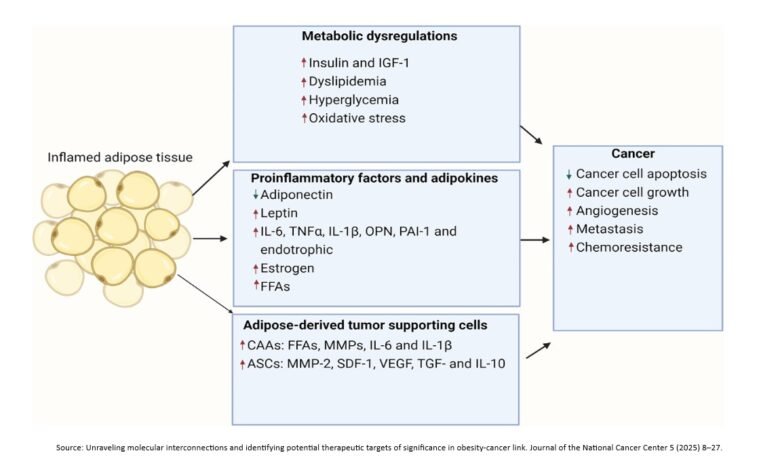
The link between Obesity and Cancer has emerged as a significant risk factor for a range of malignancies, including melanoma, endometrial, prostate, pancreatic, esophageal adenocarcinoma, colorectal carcinoma, renal adenocarcinoma, and pre-and post- menopausal breast cancer. A narrative review published by researchers from Qatar, Saudi Arabia, UAE, and India offers a comprehensive examination of the molecular interconnections between obesity and cancer…
Read More » -
Public Health
Male Infertility in Egypt – Epidemiology and temporal trends
Male infertility is a significant global health issue. However, lack of reliable epidemiological data on male infertility in Egypt and the Middle East and North Africa (MENA) region poses a challenge to understanding region-specific risk factors. A recent retrospective study on male infertility in Egypt sought to bridge this gap. The study reviewed the medical records of 3,037 infertile men…
Read More » -
Public Health
UAE Indoor Air Pollution – Research Strategy
In the United Arab Emirates (UAE), Indoor Air Pollution has become an exceptionally important health issue. Weather conditions like extreme summer temperatures frequently exceeding 42°C (108°F) force residents to spend prolonged periods indoors in tightly sealed, air-conditioned buildings. This high indoor exposure, combined with significant outdoor fine particulate matter (PM2.5) from windblown desert dust and anthropogenic sources, has raised serious…
Read More » -
Non-Communicable Diseases
Diabetic Foot Ulcer Infections – Carbapenemase Producing Multidrug Resistant Organisms
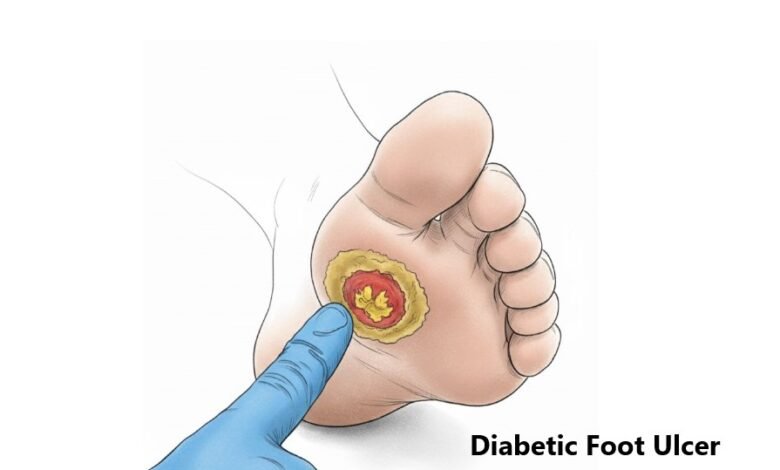
Diabetic foot ulcers (DFUs) represent one of the most severe and debilitating complications of diabetes, frequently necessitating non-traumatic lower-limb amputations. The clinical challenge of managing DFUs has been profoundly aggravated by the rising prevalence of multidrug-resistant (MDR) bacteria. Among the most alarming of these MDR pathogens are the carbapenemase and extended-spectrum β-lactamases (ESBLs) producing Gram-negative bacteria, including Escherichia coli and…
Read More » -
Public Health
Expanded Premarital Screening in UAE – Outcomes of Capacity Building Workshops for Physicians
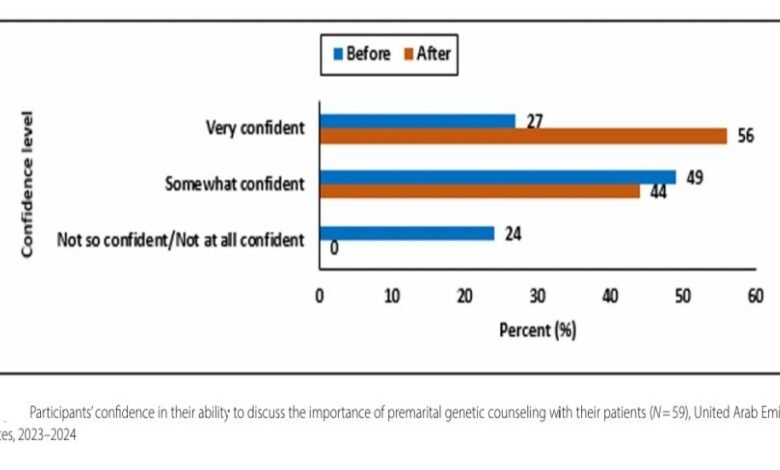
Premarital screening in UAE is a critical public health strategy for mitigating hereditary disorders in the local United Arab Emirates (UAE) population, where consanguineous marriages account for approximately half of all unions. However, the effective implementation of expanded PMS programs relies heavily on the expertise of healthcare professionals, many of whom lack specific training in genetic counselling. To address this…
Read More » -
Cancers
Colorectal Cancer in GCC Gulf Countries – Diagnosis and Management: Expert Recommendations
Colorectal Cancer in GCC (Gulf Cooperation Council) countries has incidence rates from 9.9 to 15.9 per 100,000 people. Experts are concerned about a rising trend, especially in individuals less than 50 years old, linked to rapid urbanization, poor diet, low physical activity, and increased hereditary risk due to a high rate of consanguineous marriages. Survival rates in the Gulf are…
Read More » -
Public Health
Influence of High BMI on Male Infertility – Oxidative Stress Markers and Semen Parameters
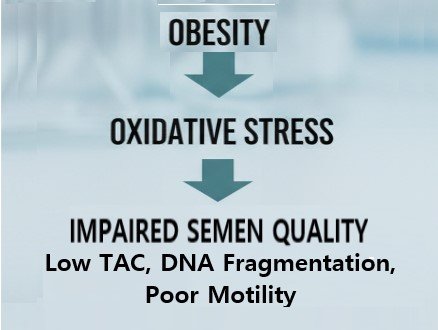
This is a study on the influence of High BMI on Male Infertility. Infertility affects a significant number of couples globally, with male factors, primarily poor semen quality, contributing to nearly 40% of cases. While the precise causes of infertility are often unclear, this study from Iran investigated the influence of body mass index (BMI) on semen quality and oxidative…
Read More » -
Infectious Diseases
Pseudomonas aeruginosa in hospitalized patients – A Saudi Arabian study on resistance patterns and virulence factors
Pseudomonas aeruginosa is categorized by global health authorities as a “critical” pathogen due to its increasing propensity for antibiotic resistance. It is a significant cause of severe healthcare-associated infections, including ventilator-associated pneumonia and bloodstream infections, especially in critically ill patients. A recent retrospective observational study conducted at King Khalid Hospital in Saudi Arabia and published in Nature Scientific Reports analyzed…
Read More » -
Non-Communicable Diseases
Lipoprotein(a) Knowledge, Awareness, and Clinical Practice Among Physicians in the Arabian Gulf Region
A study of 1069 physicians across the Arabian Gulf region (Saudi Arabia, Oman, United Arab Emirates, Qatar, Kuwait, and Bahrain) revealed a general limited knowledge and awareness of Lipoprotein(a) (Lp[a]). Lp(a) is a promising biomarker with the potential to improve atherosclerotic cardiovascular disease risk assessment. The overall mean knowledge score was modest (M = 9.0 ±3.5) out of a possible…
Read More » -
Cancers
Advancing CAR T-Cell Therapy in Solid Tumours
Chimeric Antigen Receptor (CAR) T-cell therapy has achieved transformative success in treating blood cancers, with certain B-cell malignancies showing complete remission rates exceeding 80%. However, applying this potent immunotherapy to solid tumors remains a formidable challenge. The primary hurdles stem from the hostile tumor microenvironment (TME), which features heterogeneous antigen expression, physical barriers to T-cell infiltration, and an immunosuppressive nature…
Read More »