

- CIN, observed in the majority of sporadic cases, involves gross karyotypic changes and copy-number shifts that disrupt master regulators including APC, KRAS, and TP53.
- Conversely, MSI arises from DNA mismatch repair (MMR) deficiency triggered by germline mutations in Lynch syndrome or epigenetic MLH1 silencing, which prompts replication slippage and high neoantigen production.
- CIMP coordinates extensive hypermethylation of tumor suppressor promoters, often mediated through BRAF V600E mutations and the transcriptional repressor MAFG.
The Computational Revolution: From Multi-Omics to AI Pathology: As molecular characterization advanced, classification evolved from broad clinicopathological groupings to consensus molecular subtypes (CMS1–4), single-cell intrinsic subtypes (iCMS), and pathway-derived subtypes (PDS). Concurrently, artificial intelligence is reshaping digital pathology. Validated deep-learning models can now evaluate routine hematoxylin and eosin (H&E) whole-slide histology images to accurately predict MSI and POLE mutations without immediate genetic testing, offering rapid, cost-effective pre-screening tools.
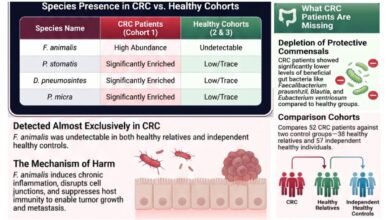
Microenvironmental Remodeling and Microbiome Drivers: CRC progression is heavily orchestrated by dynamic crosstalk within the tumor microenvironment (TME). Epigenetic and metabolic adaptations, such as the methionine–PCSK9 axis, downregulate low-density lipoprotein receptors, impair antigen presentation, and induce CD8⁺ T-cell exhaustion. Simultaneously, gut microbiota dysbiosis fuels disease: colibactin-producing pks⁺ Escherichia coli induces double-strand DNA breaks, while Fusobacterium nucleatum secretes succinate, blunting cGAS–IFN-β signaling and blocking cytotoxic immune infiltration.
Overcoming Therapeutic Resistance in “Cold” Tumors: While immune checkpoint inhibitors produce durable responses in hypermutated MSI-H tumors, approximately 85% of metastatic CRC cases are microsatellite-stable (MSS/pMMR), characterized by an immune-excluded “cold” microenvironment maintained by TGF-β signaling and dense stroma.
To break this barrier, investigators are deploying personalized neoantigen vaccines (such as mKRAS-VAX targeting six prevalent KRAS mutations), next-generation multi-specific antibodies (including the EGFR-degrading petosemtamab and the EGFR/c-Met/VEGF trispecific TAVO412), and microbiome-clearing nanoplatforms designed to eliminate oncogenic bacteria while re-activating host immunity. Integrating multi-omics, computational pathology, and microenvironmental targeting represents the clinical foundation for durable, personalized CRC care.